

Racing blog
The Pulse of the Industry: Why Yearling Sales Matter More Than Ever
Friday 29 August
2025
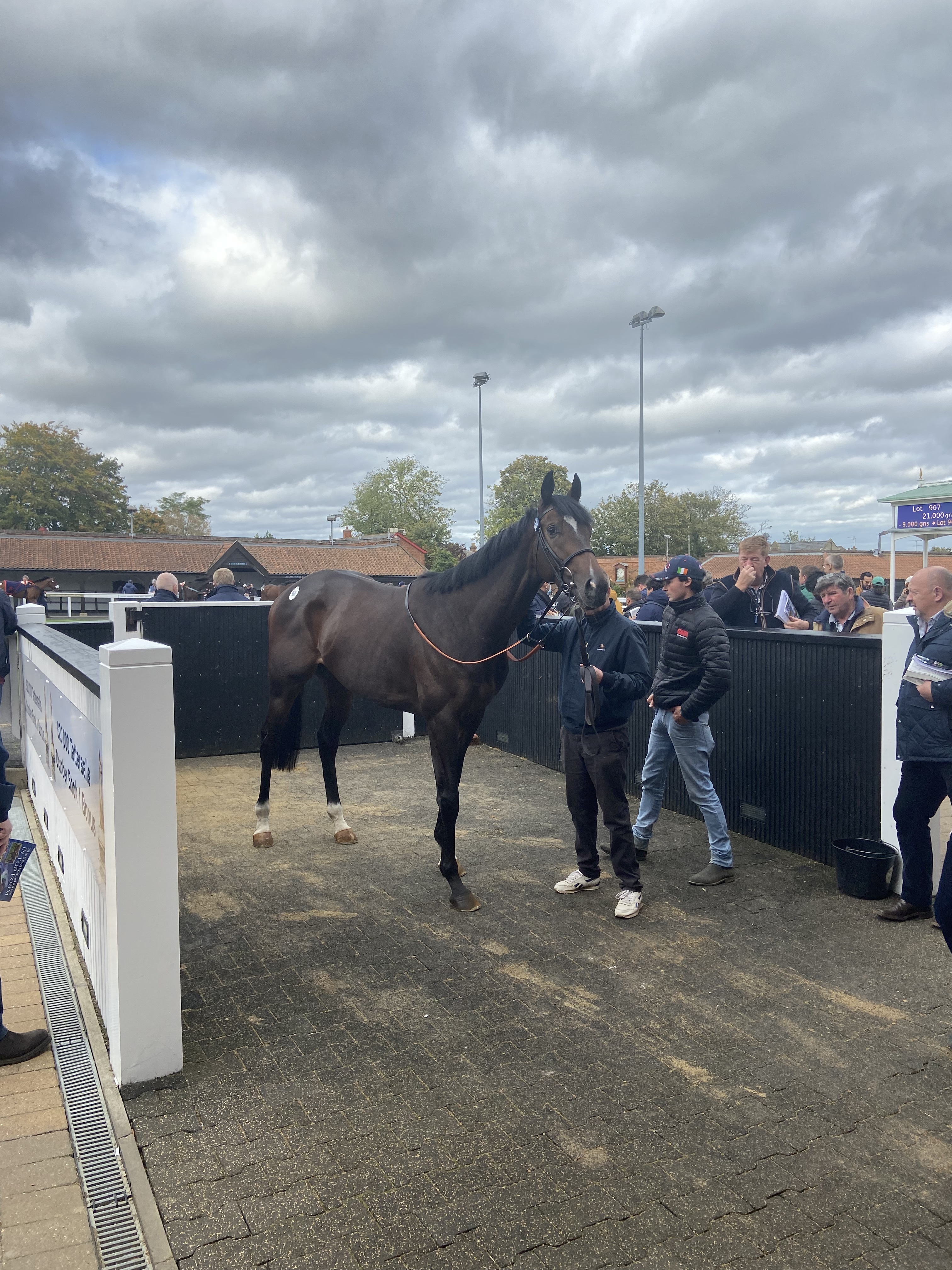
Each autumn, as the turf season progresses into its championship stage, a different kind of contest begins—not on the racecourse, but in the sales ring. Yearling sales across Europe—Tattersalls, Goffs, Arqana, and beyond—are where the sport's future is quietly auctioned off, one stride at a time.
But the yearling sale is more than a spectacle of polished horses. It is the structural engine of the Thoroughbred industry. Without it, the entire model of modern Flat racing—from the shape of stallion books to the careers of syndicates, breeders, agents, and even trainers—would not function as it does today.
To understand racing’s commercial rhythm, you must understand what the yearling sales truly are: not simply a place to buy horses, but what success of the industry as a whole rests on.
A Marketplace of Futures
At their simplest, yearling sales are where untried stock—typically 15 to 20 months old—is publicly offered for purchase ahead of entering full training.
But in practice, they serve multiple, critical functions:
-
They provide liquidity for breeders, turning young horses into cash.
-
They serve as a price discovery system, giving transparency to the value of bloodlines and conformation.
-
They allow trainers, syndicates and agents to source horses from across the breeding spectrum.
-
They create an entry point for new owners, particularly syndicate members and international buyers.
What If There Were No Yearling Sales?
Remove yearling sales from the calendar and the effect would be seismic.
Breeders, especially smaller operators, would have no way to monetise their stock until much later—if at all. Instead of a liquid, structured, and global public market, you would have a patchwork of private arrangements, dominated by insider access, risk-averse buyers, and cash-rich owner-breeders.
This would mean:
-
Fewer mares covered, especially by commercial stallions, as breeders become more cautious.
-
Shrinking stallion books, affecting stud viability.
-
Vanishing small and medium-sized breeders, who rely on one or two strong sales a year to survive.
-
Limited access for new owners, especially those reliant on syndicates or public auctions.
-
Reduced international investment, with no visible stage to assess and acquire young bloodstock.
-
Less diversity in ownership and opportunity, as quality concentrates in fewer, wealthier hands.
In short, the sport becomes narrower, less accessible, and more brittle.
The Economics of Preparation: Behind the Ringwalk
Before a yearling reaches the ring, months of meticulous work go into its preparation. From June through to sale day, horses are:
-
Handled and educated, often for the first time since weaning.
-
Exercised daily, usually on walkers and in-hand to build muscle and condition.
-
Groomed, managed, and monitored, to optimise coat, weight, temperament and movement.
-
Trained to parade, ensuring they show calmly and correctly under pressure.
For many breeders, this process is contracted out to specialist consignors, who manage everything from preparation to showing. These consignors—Baroda, Glenvale, Ballylinch, Highclere and others—play a vital role, particularly for smaller breeders who lack staff, infrastructure, or sales expertise.
It’s no overstatement to say that a good prep can add tens of thousands in value. Equally, a poor one can bury a useful horse.
Pinhooking: The Industry’s Invisible Backbone
A significant proportion of horses at yearling sales weren’t bought to race—they were bought to sell on.
Pinhookers—those who buy foals with the aim of re-selling them as yearlings (and yearlings to 2yos)—are a vital part of the ecosystem. They provide liquidity at the foal sales in November and December, and help drive the middle market at yearling time.
These players operate on thin margins. They’re betting that a foal will grow well, remain sound, mature into a good physical, and match fashion trends. If it works, a €40,000 foal might make €140,000 ten months later. If not, it may fail to recoup the cost of purchase, prep, and commission.
A smaller pinhooking circle exists too from yearling to breeze-up, where horses are trained to gallop and then reoffered the following spring as two-year-olds. These operators must identify not only pedigree and physique, but mentality and movement, as horses are bought to gallop fast—publicly—in a straight line, and in a good time.
Who Buys—and Why That Matters
While the headlines focus on Coolmore, Godolphin and Amo bidding in six figures, the heartbeat of the yearling sale is broader.
-
Syndicates looking for £30k–£80k prospects
-
Trainers with private clients seeking value
-
First-time owners looking to spend sensibly
-
Overseas buyers targeting European pedigrees
-
End-users for resale or stallion potential
This mix matters. It democratises ownership, refreshes the pool of participants, and ensures horses filter across grades.
Without a public sale, much of this dissolves into opaque private trading, often dominated by bigger operations with access and leverage.
The Sales as Cultural Theatre
More than a market, the yearling sales are a social and strategic theatre for the sport. They mark the end of one cycle (the breeding season) and the start of another (the two-year-old campaign). They influence how stallions are perceived. They drive stories for the media, for owners, and for syndicates. And they reward horsemanship—not just deep pockets.
A single week at Tattersalls, Goffs or Arqana will shape the Flat season two years ahead. The Derby winner may be bought. A syndicate may launch. A stallion’s future may be secured—or stalled.
In Conclusion
The yearling sales are not simply where horses are sold. They are where racing renews itself—in bloodlines, in ownership, in ambition. They provide:
-
A way for breeders to survive
-
A path for new owners to participate
-
A structure for traders to operate
-
A global stage for bloodstock commerce
-
And a mirror for the sport’s future
Without them, the ecosystem frays, the sport narrows and the dream that anyone, anywhere, could breed or buy the next Classic winner fades into myth.
The sales ring may be quiet, civilised and formal. But make no mistake—it’s the loudest engine the sport has.