

Racing blog
Four Weeks to Go: Cheltenham’s Great Clashes Come Into Focus
Thursday 12 February
2026
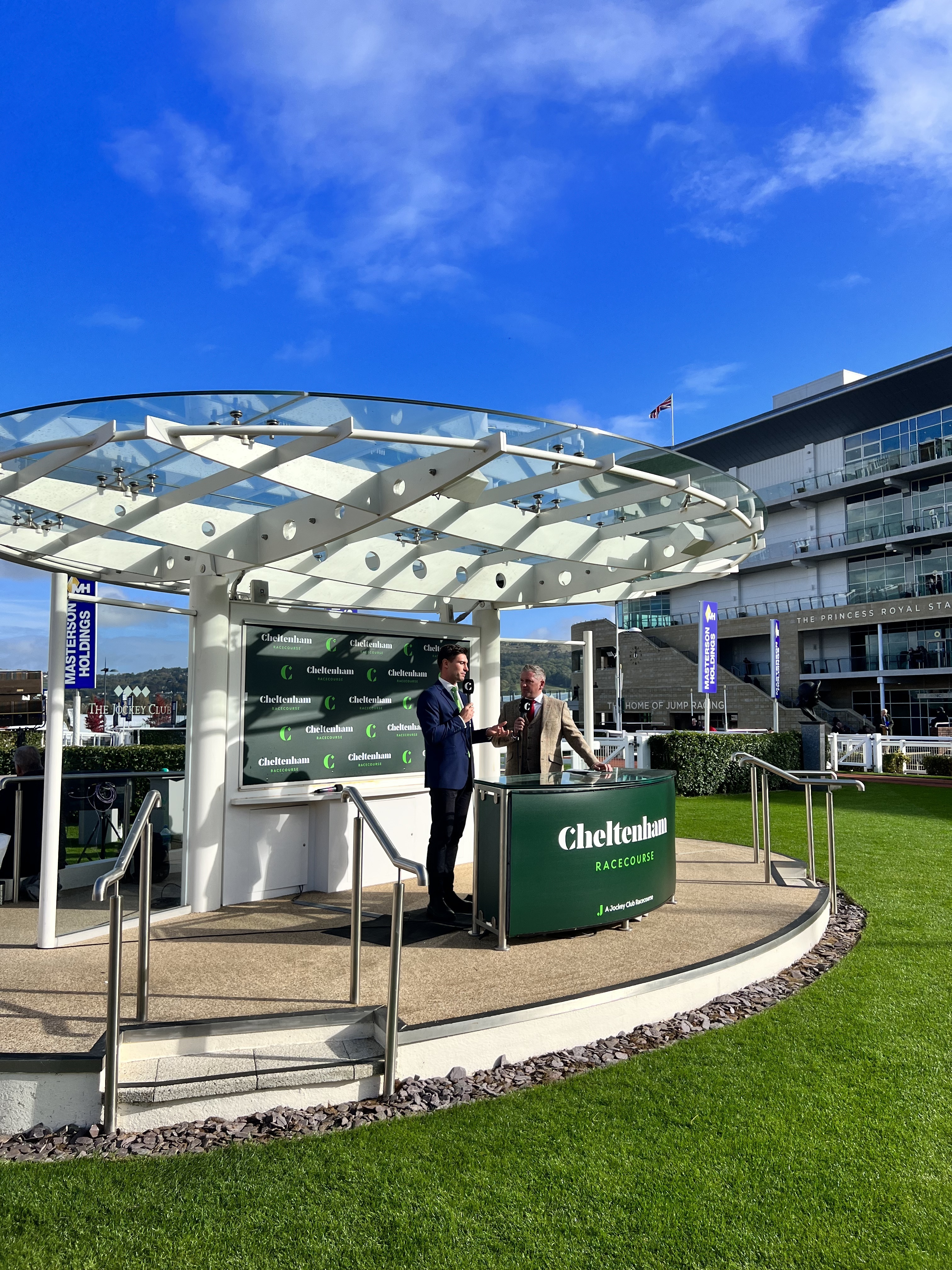
With less than a month until the tapes rise at the Cheltenham Festival, the meeting’s narrative spine is beginning to harden. This is the point in the season when trial winners are reassessed, reputations are weighed against raw data, and trainers quietly begin to narrow their options.
What distinguishes this year’s Festival is not just depth, but confrontation: elite divisions colliding rather than drifting past one another. From novice speedsters in the Arkle to heavyweight stayers in the Gold Cup, Cheltenham 2026 is shaping up as a week defined by head-to-head rivalries.
Let’s take the feature races in turn.
Arkle Trophy: Youth, Pace, and Unanswered Questions
The Arkle often reveals a future Champion Chaser. This year it looks more like a proving ground for raw brilliance.
At the head of the market sit Lulamba, Kopek Des Bordes, Romeo Coolio, and the progressive mare Kargese.
Lulamba represents Nicky Henderson’s Seven Barrows precision, likely partnered by Nico de Boinville, while Kopek Des Bordes comes from Willie Mullins’ endlessly productive Closutton academy, where Paul Townend is the first call.
Romeo Coolio brings toughness and tactical speed, and Kargese adds intrigue as a mare mixing it with the boys – never an easy task in a two-mile championship novice chase.
What makes this Arkle compelling is the absence of a standout. Each arrives with form, each with questions. At Cheltenham, jumping fluency under pressure tends to separate promise from permanence.
Champion Chase: A Three-Way Shootout
If the Arkle is about potential, the Champion Chase is about execution.
Here we are treated to a vintage clash between Majborough, the returning hero Marine Nationale, and Mullins’ electric Il Etait Temps.
Marine Nationale, trained by Barry Connell, carries both class and emotional resonance, having already written himself into Festival folklore. Majborough offers raw speed and a devastating turn of foot, while Il Etait Temps is the Closutton wild card – capable of brilliance on his day, if everything clicks.
This feels like a race that will be decided not by stamina, but by fractions of seconds at the fences. One hesitant jump down the back straight could be terminal.
Champion Hurdle: A Division in Flux
The Champion Hurdle, once dominated by a single name, now reads like a short story collection.
There is the established greatness of Constitution Hill, Henderson’s superstar whose cruising speed remains unmatched when he is right.
Opposing him are the rising force The New Lion, Gordon Elliott’s rapidly improving Brighterdaysahead, and Mullins’ dual-purpose ace Lossiemouth.
Lossiemouth brings versatility and Festival experience; Brighterdaysahead brings momentum; The New Lion represents the new generation. Constitution Hill brings history.
It is rare to see such contrasting profiles converge in one race. If Constitution Hill is back to his devastating best, he wins. If not, this becomes a tactical chess match between youth, resilience, and adaptability.
Gold Cup: Power Meets Possibility
The Cheltenham Gold Cup remains the sport’s ultimate examination, and this year it balances established dominance with emerging ambition.
Willie Mullins’ reigning king Galopin Des Champs anchors the field. Strong, accurate, and relentless, he has become the modern Gold Cup standard bearer.
Trying to unseat him are Jango Baie, The Jukebox Man, Mullins’ own mercurial Gaelic Warrior, and the improving French-bred Haiti Couleurs.
Each brings a different weapon: stamina, freshness, tactical speed, or raw potential. But Galopin Des Champs brings certainty – and that counts for plenty over three miles, two furlongs, and 22 fences.
Paul Townend’s partnership with him is now instinctive. Others will need both a career-best performance and a touch of Cheltenham chaos.
The Bigger Picture
Cheltenham has always been about more than winners. It is about preparation meeting pressure, and talent meeting terrain. Trainers like Henderson and Mullins approach it from different philosophies, but with the same objective: arrive with horses peaking at precisely the right moment.
This year’s Festival feels defined by collision rather than procession. Every championship race carries multiple live contenders, and none feels preordained.
For those who appreciate nuance – the sectional timings, the jockeyship, the subtle art of placing a horse – this promises to be a Festival rich in detail. For everyone else, it offers the simplest pleasure racing can provide: brilliant animals testing themselves on the sport’s hardest stage.
Four weeks out, the picture is sharpening. Now comes the waiting.