

Racing blog
The British Flat titles in 2026: power, pressure and the shape of the season
Thursday 26 March
2026
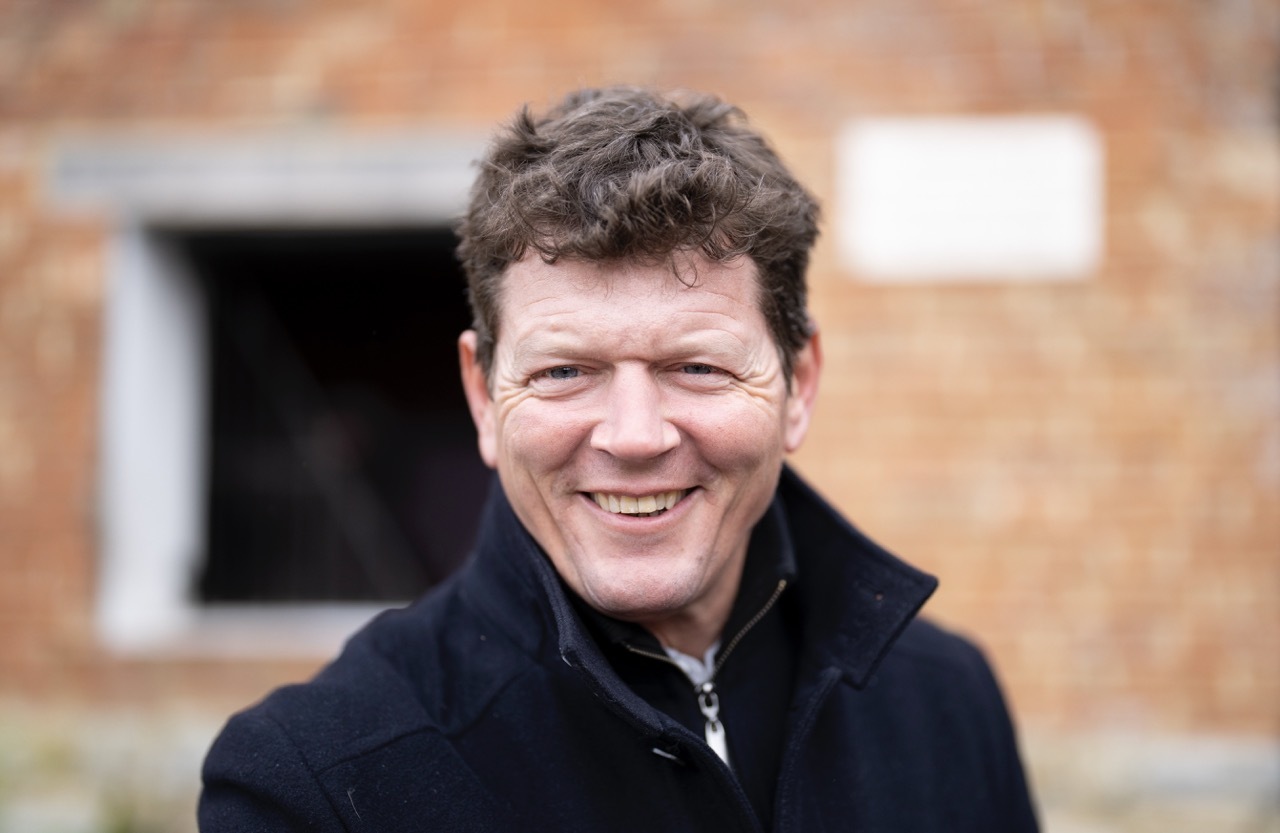
The British Flat season has long been defined by two parallel contests: the relentless arithmetic of the jockeys’ title, measured in winners, and the more aristocratic calculus of the trainers’ championship, settled by prize-money accumulation. Between them, they reveal not merely who wins most often, but how power is distributed across the sport - between volume and quality, between depth of ammunition and brilliance at the top table.
As the 2026 campaign approaches its meaningful stages, both titles appear unusually well-poised: one shaped by a generational duel, the other by the quiet consolidation of a globalised elite.
Jockeys’ Championship: volume versus class
The modern Flat jockeys’ title is, in essence, a test of appetite. Since its reconfiguration to run from the Guineas meeting to British Champions Day, it has rewarded those willing to traverse the country - from Beverley to Bath - in pursuit of sheer numerical advantage.
The recent pattern
The past half-decade has been dominated by a familiar axis. Oisin Murphy reasserted his supremacy in 2024 and duly retained the title in 2025 with 143 winners, combining elite support with an almost industrial work ethic.
Yet if Murphy remains the benchmark, the shape of the championship is changing beneath him. The emergence of Billy Loughnane - tireless, ubiquitous, and astonishingly productive - has introduced a new dynamic. Loughnane finished second in the 2025 title race but swept the annual championship (calendar-year winners) with a remarkable 207 victories, underlining his dominance across both turf and all-weather circuits.
Behind them, a densely packed second tier - Rossa Ryan, Cieren Fallon, Tom Marquand - reflects the modern professional’s dilemma: plenty of opportunities, but rarely the ammunition to outgun the leaders over six months.
The tactical divide
Murphy’s approach is rooted in quality and quantity: attached to powerful yards, yet willing to travel relentlessly. Loughnane, by contrast, has embraced a purer volume model - riding at a ferocious tempo, often at smaller meetings, accumulating wins with metronomic consistency.
This dichotomy - quality versus quantity - is the defining theme heading into 2026.
2026: the likely contenders
Oisin Murphy - Still the man to beat. His strike-rate advantage suggests that, given comparable opportunities, he converts better than any rival.
Billy Loughnane - The most dangerous challenger. If he sustains his extraordinary ride count, mathematics alone may carry him to the title.
Rossa Ryan - Increasingly associated with big-race success; if his backing strengthens, he could bridge the gap.
William Buick - A fascinating outlier. He rode fewer winners but amassed far greater prize-money, reflecting his position as Godolphin’s retained rider.
Buick’s case illustrates a crucial point: the jockeys’ title is not always a measure of the best jockey, merely the most prolific. That tension remains unresolved - and perhaps is the championship’s enduring charm.
Trainers’ Championship: power and patronage
If the jockeys’ title is democratic, the trainers’ championship is resolutely aristocratic. It is decided by prize money, and therefore by access - to owners, bloodstock, and the international circuit.
The established order
In recent years, the Flat trainers’ title has been dominated by a triumvirate:
Charlie Appleby - The global arm of Godolphin, with strength in Classics and international races.
John and Thady Gosden - Masters of the middle-distance programme, with a deep reservoir of Group performers.
Aidan O’Brien - The Irish titan, whose British raids are targeted but devastating.
This triumvirate has redefined the championship. No longer is it merely about domestic dominance; it is about strategic placement of elite horses in the richest races.
The British challenge
Behind them sit the leading domestic yards:
Andrew Balding - prolific, versatile, and increasingly potent at the highest level.
Richard Hannon - a volume trainer with strength in juveniles.
Roger Varian - quietly effective, especially with middle-distance stock.
Yet the structural disadvantage is clear. Prize-money concentration at the top end means that one or two major races - a Derby, a King George - can tilt the entire championship.
2026: the likely shape
Charlie Appleby - Still the yard to beat. His access to Godolphin’s depth gives him unmatched firepower across all divisions.
John and Thady Gosden - If they secure a strong Classic crop, they could easily top the table.
Aidan O’Brien - The perennial disruptor; even a part-time British campaign can be enough if it includes major Group 1s.
Andrew Balding - The most credible domestic challenger, particularly if his improving pattern horses continue to progress.
The key variable remains the Classics. The trainer who captures Newmarket, Epsom and Ascot tends, more often than not, to capture the title.
Conclusion: a season of tension
The 2026 Flat season promises a compelling dual narrative.
In the saddle, it is a question of arithmetic versus artistry: whether Murphy’s efficiency can withstand Loughnane’s relentless accumulation.
In the training ranks, it is a question of empire versus insurgency: whether the established global powers can be disrupted by the best of the domestic challengers.
For those who follow the sport closely, these titles are more than statistical curiosities. They are, in their different ways, mirrors of racing itself - a sport where success is measured not only by brilliance, but by access, endurance, and the willingness to pursue opportunity wherever it lies.