

Racing blog
Scottish Grand National 2026: A Handicap of Compression and Opportunity
Friday 17 April
2026
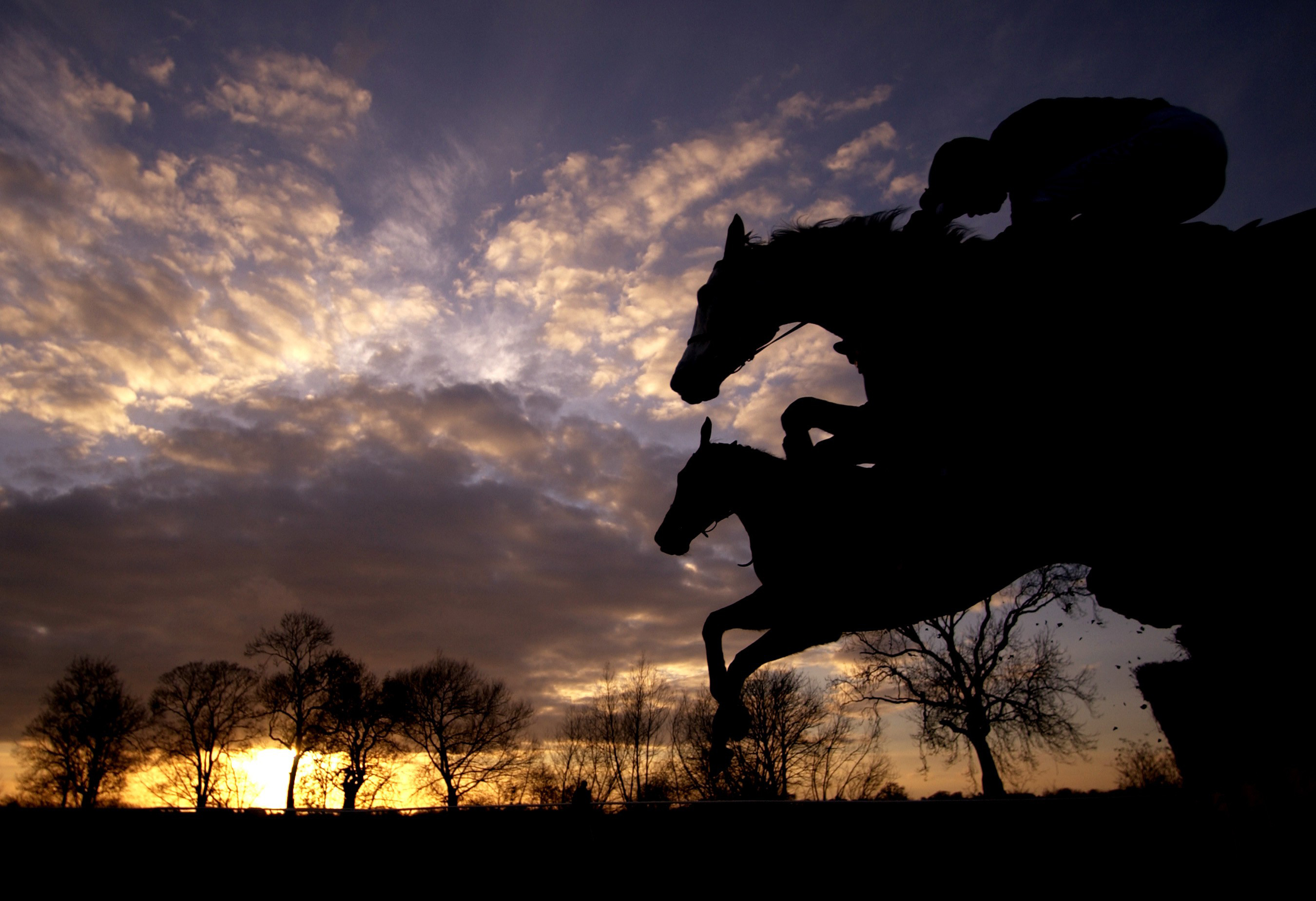
If the Grand National at Aintree is a test of chaos management, the Scottish equivalent at Ayr is something subtly different - a race of compression, where the handicap brings a wide spectrum of ability into uncomfortable proximity.
This year’s field reflects that dynamic perfectly. There is no standout; instead, a tightly packed group of second-tier graded performers, seasoned handicappers and emerging stayers converge around a mark in the mid-130s to mid-140s. In such a race, marginal gains - positioning, jumping fluency, and restraint - become decisive.
The Top of the Handicap: Class Under Pressure
Blaze The Way (Ms Margaret Mullins; Danny Mullins) heads the weights, and with that comes a familiar Scottish National question - can a horse concede weight across such a searching trip?
He is not without credentials, but his task is structural rather than circumstantial. Giving weight away at Ayr, where rhythm is everything, places immediate pressure on both horse and rider.
Just beneath him sits Quebecois (Paul Nicholls; Harry Cobden), whose consistency in strong handicaps makes him one of the more dependable profiles in the field. Cobden’s booking is particularly noteworthy - few riders are better at keeping a horse in a sustainable rhythm over extended trips.
King Of Answers (Lucinda Russell & Michael Scudamore; Derek Fox) represents the home challenge at the top end. Fox, a rider synonymous with Scottish staying chases, brings an intuitive understanding of pace around Ayr. The horse’s progressive profile suggests he may still have more to offer.
Nicholls’ Dual Challenge
Paul Nicholls fields two of the more compelling runners in the race.
Isaac Des Obeaux (Sam Twiston-Davies) is arguably the more interesting of the pair. Still lightly exposed at marathon distances, he arrives with the profile of a horse improving into this trip rather than merely enduring it. Twiston-Davies’ positive style may suit a horse who appears happiest when allowed to travel prominently.
By contrast, Quebecois is the known quantity - reliable, tactically flexible, and likely to give his running. Between them, Nicholls has both solidity and upside.
The Stayers: Substance Over Flash
The Scottish National often rewards horses with uncomplicated stamina, and several in this field fit that mould.
Our Power (Sam Thomas; Dylan Johnston) is one such runner - experienced, battle-hardened, and capable of grinding his way into contention if the race becomes attritional.
Road To Home (Willie Mullins; jockey tbc) brings Irish interest into the staying division. While perhaps lacking the immediate class edge of some rivals, Mullins’ placement in such races is rarely accidental.
Guard The Moon (Nigel & Willy Twiston-Davies) and Herakles Westwood (Warren Greatrex; Sean Bowen) both offer proven stamina, though their profiles suggest they may need the race to collapse late rather than dictate it themselves.
The Progressive Profiles: Where the Race May Turn
As ever in Ayr’s feature, the most interesting runners sit not at the top, but just beneath.
Montregard (Tom Lacey; Stan Sheppard) is perhaps the archetype - a horse arriving in form, still progressing, and seemingly well suited to a test of this nature. His recent profile suggests he is peaking at precisely the right moment.
Kap Vert (Philip Hobbs & Johnson White) is another of interest. Younger than many of his rivals and still developing, he brings a freshness that can prove invaluable in a race where many are exposed.
Chasingouttheblues (Mark Walford; Jamie Hamilton) is difficult to ignore. A sequence of wins marks him out as one of the few in the field arriving with genuine momentum, and such trajectories often translate well into this race.
The Experienced Middle: Reliability and Limits
A substantial portion of the field sits in the category of reliable but perhaps limited.
Maximilian (Donald McCain; Theo Gillard) embodies this group - consistent, tough, and likely to run his race, though perhaps vulnerable to less exposed rivals.
Famous Bridge (Nicky Richards; Sean Quinlan) and Git Maker (Jamie Snowden) share similar profiles: capable of placing, but requiring optimal conditions to threaten victory.
Val Dancer (Mel Rowley; Charlie Hammond) and Promontory (Sarah Joanna Connell) add further depth, both bringing solid handicap form without obvious upward mobility.
The Irish Angle
Beyond Mullins, Irish representation is selective but intriguing.
Kim Roque (Joseph O’Brien) is one of the more interesting runners in the lower half of the weights. Younger than most and still developing, he fits the modern trend of horses stepping into staying handicaps earlier in their careers.
J’Arrive de L’Est (Emmet Mullins; James Bowen) is another to consider. His profile is less straightforward, but Emmet Mullins’ record in unconventional targets demands respect.
The Longshots and Outliers
No Scottish National is complete without its share of outsiders capable of disrupting the narrative.
Collectors Item (Jonjo & A J O’Neill) and Gabbys Cross (Nick Scholfield; Michael Kenneally) sit just below the main contenders, each with enough form to suggest involvement without obvious winning credentials.
Duffle Coat (Gordon Elliott) is perhaps the most enigmatic runner in the field - a horse whose past ability exceeds his recent output, making him difficult to assess.
At the foot of the weights, Magna Sam (Alastair Ralph) represents the veteran presence - experienced, but likely to find younger legs too strong at this stage.
Conclusion: A Race Won in Margins
The Scottish Grand National rarely rewards brilliance alone. Instead, it is a race of accumulation:
-
conserving energy rather than expending it
-
jumping efficiently rather than spectacularly
-
committing late rather than early
This year’s field, tightly compressed in ability, reinforces that principle. There is no dominant narrative, no single horse around whom the race revolves.
Instead, the outcome will be shaped by small decisions - by riders judging pace fractions, by horses settling into rhythm, and by the gradual erosion of rivals over nearly four miles.
In such conditions, the winner is rarely the most obvious horse beforehand - but almost always the one best suited to the demands of the day.